

TL;DR
Choosing lamination for washable and reusable foam board signs comes down to how you plan to use the sign. Matte lamination protects the surface and kills glare but cannot be erased. Gloss lamination is the easiest to wipe clean and works in a pinch with dry-erase markers. Dry-erase lamination is the only real option for signs you plan to write on and erase repeatedly, but the film quality matters enormously. Budget polypropylene films ghost within months, while coated polyester lasts years.
Lamination turns a fragile foam board sign into something you can actually use more than once. Without it, the paper face of foam core is vulnerable to fingerprints, moisture, scuffing, and marker stains. With the right lamination, that same board becomes a durable surface you can clean, write on, or display for months.
But “the right lamination” depends entirely on what “washable and reusable” means for your specific situation. Do you need to wipe away dust and fingerprints from a trade show display? Or do you need to write a new employee’s name on a welcome board every Monday morning? Those are fundamentally different requirements, and they call for different lamination types.
This guide walks through every term and option you need to understand when choosing lamination for washable and reusable foam board signs, so you can order with confidence instead of guessing.
Upload your design and select lamination when you’re ready.
Why Lamination Matters for Foam Board Specifically
Foam board (sometimes called foam core) is a lightweight sheet of polystyrene foam sandwiched between two paper faces. That paper surface is what makes foam board printable, affordable, and easy to work with. It’s also what makes it fragile. If you need a primer on the material itself, learn about foam board materials, sizes, and thicknesses.
Lamination bonds a thin plastic film over the printed surface. This film serves three purposes:
- Protection from scratches, moisture, fingerprints, and handling damage
- Appearance control through gloss, matte, or satin finishes
- Functionality like write-on/wipe-off capability with dry-erase laminate
Because foam board is primarily an indoor material, lamination choices are framed around indoor conditions: fluorescent lighting, human handling, marker use, and periodic cleaning. Foam board posters can last up to two years with proper care, and the right lamination is what makes that lifespan realistic.
The Two Meanings of “Reusable”
Before getting into lamination types, it’s worth untangling a common source of confusion. When people search for how to choose lamination for washable and reusable foam board signs, they usually mean one of two things:
Washable (surface cleaning): The sign stays the same, but it gets dirty from handling, dust, or environmental grime. You want to wipe it down and have it look fresh again. A retail point-of-sale sign or a courtroom exhibit board fits this category.
Reusable (write, erase, repeat): The sign’s content changes. You write on it with markers, erase what you wrote, and write something new. Menu boards, meeting room displays, goal trackers, and oversized charity checks fit here.
Every lamination type handles surface cleaning reasonably well. But only certain laminations handle the write-erase cycle. Getting this distinction wrong is how people end up with a “reusable” board that ghosts after a week.
Matte Lamination
What It Is
Matte lamination applies a non-reflective plastic film with a smooth, velvety texture. It absorbs light rather than bouncing it back, which eliminates glare and reduces reflections on the printed surface.
How It Performs on Foam Board Signs
Matte is the most popular finish among sign professionals. Practitioners on the Signs101 forum report that one laminate supplier sells 80% matte to 20% gloss, and another professional confirmed that 95% of their work gets matte lamination, primarily for temporary exhibits and wall murals.
The reasons are practical. Under fluorescent lights, stage lighting, or courtroom overheads, matte eliminates the glare that makes glossy signs unreadable from certain angles. It also hides fingerprints and minor scratches far better than gloss, so a matte board looks good even after dozens of people handle it at a trade show.
Washability
Matte-laminated foam board can be wiped with a clean, dry, non-abrasive cloth. For stubborn marks, a slightly damp cloth works. It holds up well to light surface cleaning.
Can You Write on It and Erase?
No. This is the critical limitation. You cannot erase dry-erase markers from matte laminate. The textured surface grabs the ink and won’t release it cleanly. If someone writes on your matte-laminated sign with a dry-erase marker, that writing is staying.
Matte does accept ballpoint pen and certain permanent markers well, which makes it useful for signs where someone needs to fill in a name or date once.
Best For
Courtroom exhibit boards, gallery displays, event signage, text-heavy presentations, and any situation with overhead lighting. If your sign will be viewed but not written on, matte is almost always the right choice for indoor use.
Gloss Lamination
What It Is
Gloss lamination applies a shiny, reflective film that amplifies color vibrancy and saturation. Colors look richer and more vivid. The surface feels slick and smooth.
How It Performs on Foam Board Signs
Gloss makes photographs and colorful graphics pop. For retail displays, photo boards, and trade show graphics where visual impact is the priority, gloss delivers. It provides a higher level of protection than matte for items that get handled frequently and is generally easier to clean.
The trade-off is visible. Gloss shows every fingerprint and smudge. In a brightly lit environment, it can produce distracting reflections that make text harder to read.
Washability
Gloss is the washability champion among standard laminations. Its smooth, non-porous surface repels moisture and dirt effectively. A non-abrasive cloth with citrus-based cleaner or a 70:30 mixture of isopropyl alcohol and water handles most cleaning jobs. If your foam board sign sits at a point-of-sale counter where customers touch it daily, gloss holds up better to repeated wiping than matte.
Can You Write on It and Erase?
Sort of. You can use a dry-erase marker on a gloss surface and wipe it off, but gloss lamination is not engineered for repeated write-erase cycling. It works in a pinch for occasional notes, not daily use.
Here’s where it gets interesting. A sign professional on the Signs101 forum shared a cost-effective workaround: use a standard gloss laminate with wet-erase markers instead of dry-erase. Wet-erase markers use water-based paste rather than alcohol-based ink, require a damp cloth to remove, and leave zero ghosting. The laminate material is much less expensive than dry-erase laminate, and according to this practitioner, it “works great, leaves no ghosting whatsoever, and will stay for years with no problems.”
This is a genuinely underrated option for signs that need occasional content changes rather than daily erasing.
Best For
Retail displays, photo boards, trade show graphics, and any situation where color impact matters most. Also a strong choice for budget-friendly reusable signs when paired with wet-erase markers.
Need help deciding between matte and gloss? Contact our team for guidance.
Dry-Erase Lamination
What It Is
Dry-erase lamination is a specialized coating designed specifically for write-on/wipe-off use. It creates a smooth, glossy surface that allows dry-erase markers to lay down cleanly and wipe away completely. This is the lamination that turns a printed foam board into a reusable whiteboard surface.
How It Performs on Foam Board Signs
Dry-erase lamination is the only real option for foam board signs that need true reusability. Menu boards in restaurants, meeting room welcome signs, classroom aids, oversized charity checks, goal trackers, and weekly schedule boards all depend on this lamination type.
The printed design stays permanently visible underneath. The dry-erase surface sits on top, allowing you to write variable information (names, dollar amounts, dates, menu items) with a marker and erase it when it’s time to update.
The Film Quality Problem Most People Don’t Know About
Not all dry-erase laminate is the same. The film material underneath that glossy surface varies dramatically in quality, and this is the single biggest factor in whether your reusable foam board sign works well for months or becomes a frustrating, ghosted mess.
A laminate manufacturer on the PrintPlanet forum laid out the three tiers of dry-erase film:
OPP (Oriented Polypropylene): The budget option. Good clarity, cheap price. Works fine initially, but the solvents in dry-erase markers break down polypropylene over time. Ghosting starts within months of regular use and gets progressively worse. A practitioner on Signs101 confirmed this, warning that polypropylene “will be eaten alive eventually by the solvents in dry-erase markers.”
Coated Polyester (PET): The professional-grade option. Excellent clarity, very scratch resistant, and critically, no ghosting after years of use. It costs more, typically ranging from $0.62 to $0.70 per MSI according to the same manufacturer, but it’s “worth the extra money.” General Formulations, a major laminate producer, makes a coated polyester product (GF 110 EraseMark PRO) with scratch-resistant hard coating and anti-graffiti properties that allow easy removal of even permanent markers. They rate it for five years of interior use.
Fluorinated Films: The most expensive option. Great dry-erase performance but poor optical clarity. Rarely used for printed signs because the film obscures the graphics underneath.
When choosing lamination for washable and reusable foam board signs with dry-erase capability, always ask about the film type. If a vendor can’t tell you whether they use polyester or polypropylene, that’s a red flag.
Washability and Cleaning
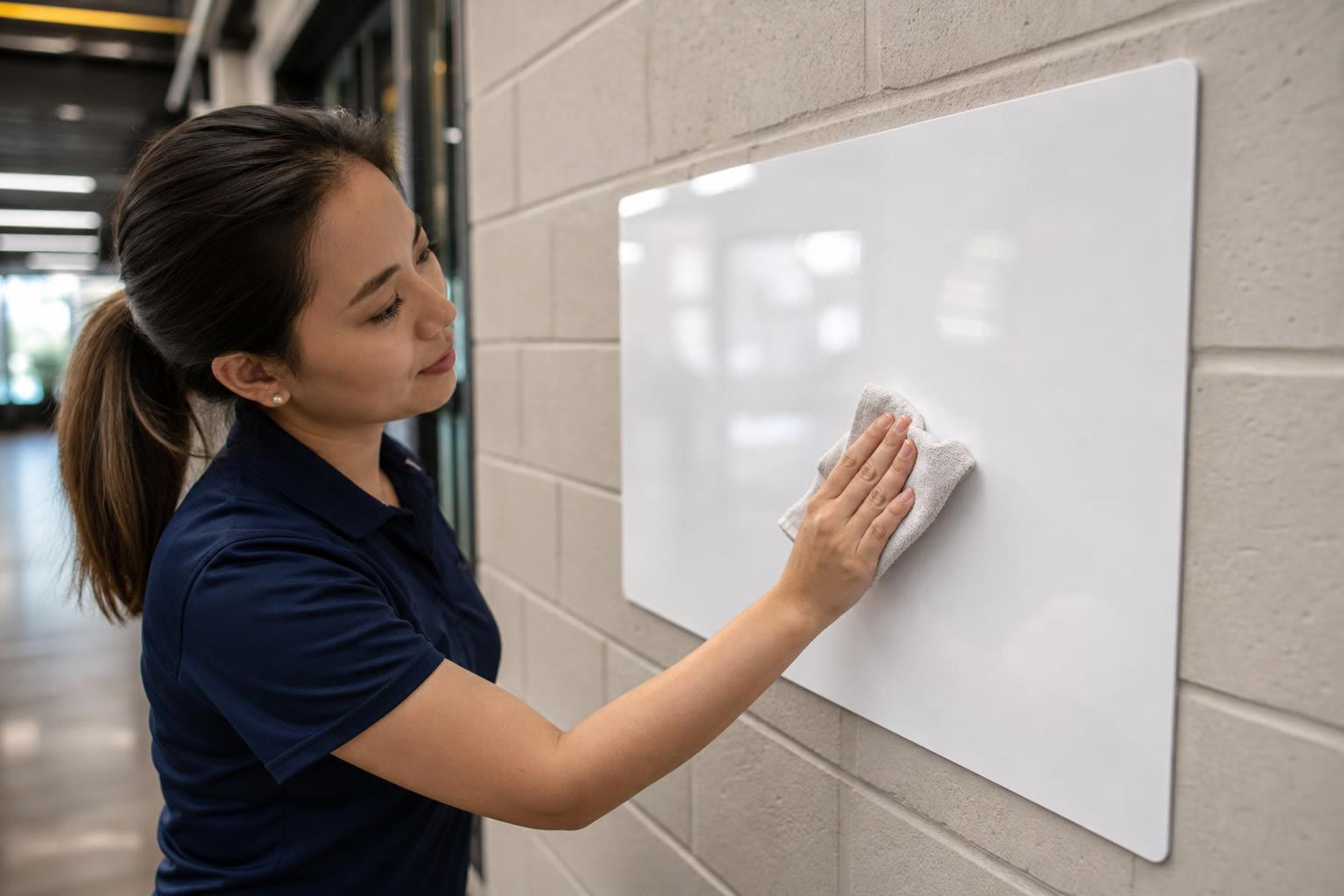
For daily erasing, a clean dry cloth or standard whiteboard eraser does the job. For deeper cleaning, use a citrus-based cleaner or isopropyl alcohol. Quality dry-erase laminate allows you to write clearly and wipe away clean even after marker has been left for days.
Best For
Menu boards, meeting room displays, oversized charity checks, goal trackers, classroom aids, event welcome signs, and any foam board sign where the content changes regularly.
Ghosting: The Problem Nobody Warns You About
What It Is
Ghosting refers to the faint marker residue that remains on a dry-erase surface even after you’ve erased it. You can see a shadow of the previous writing, and no amount of wiping removes it. Over time, a ghosted board looks dirty, unprofessional, and eventually unusable.
Why It Happens
Two factors cause ghosting. First, the quality of the laminate film. OPP films are chemically vulnerable to the alcohol-based solvents in dry-erase markers. Those solvents slowly eat into the film surface, creating microscopic pits where ink residue gets trapped. Second, leaving marker on the surface for extended periods gives the ink more time to bond with the film.
How to Prevent It
Choose coated polyester dry-erase laminate rather than polypropylene. Erase promptly when possible, don’t leave writing up for weeks at a time. Clean the surface periodically with a citrus-based cleaner or 70:30 isopropyl alcohol and water solution. Use quality dry-erase markers from reputable brands.
Premium PET film with hard coating resists ghosting for years. Some manufacturers offer guarantees of up to 10 years on their polyester dry-erase laminates.
Satin and Luster Lamination
These finishes sit between matte and gloss. Satin (sometimes called luster) provides a subtle sheen without the harsh glare of full gloss or the completely flat look of matte. Sign professionals on forums describe it as a “happy medium” that doesn’t look unfinished while avoiding reflection problems.
Satin is less commonly available for foam board signs than matte or gloss, but it’s worth asking about if you want a middle-ground aesthetic. For washability and reusability, satin performs similarly to gloss, with slightly less fingerprint visibility.
Wet-Erase Markers: The Budget Reusability Hack
This option deserves its own section because it changes the cost equation entirely.
Wet-erase markers look similar to dry-erase markers but use water-based pigment paste instead of alcohol-based ink. The writing stays put until you wipe it with a damp cloth. This semi-permanent quality is actually an advantage for signs like menu boards and A-frames, where you don’t want someone’s sleeve accidentally smudging the content.
The key benefit: wet-erase markers work perfectly on standard gloss lamination. You don’t need specialty dry-erase laminate at all. No ghosting, cheaper materials, and the writing holds up until you intentionally remove it. For signs that change weekly or monthly rather than daily, this combination of gloss laminate plus wet-erase markers is often the smarter choice.
How to Clean Each Type of Laminated Foam Board
Proper cleaning extends the life of any laminated foam board sign. Here are the protocols for each type, drawn from manufacturer care guides:
Matte Laminated Foam Board
- Wipe with a clean, dry, non-abrasive cloth for routine dust removal
- For smudges, slightly dampen the cloth with water
- Avoid excessive liquid since foam board’s paper face can absorb moisture at the edges
- Never use abrasive pads or harsh chemical solvents
Gloss Laminated Foam Board
- Wipe with a non-abrasive cloth
- For stubborn marks, apply a small amount of citrus-based cleaner or a 70:30 mixture of isopropyl alcohol and water to the cloth (not directly to the board)
- Wipe until clean, then let dry
- Avoid acetone, abrasive scrubbers, and pressure washing
Dry-Erase Laminated Foam Board
- Daily erasing: dry cloth or whiteboard eraser
- Weekly deep clean: citrus-based cleaner or isopropyl alcohol solution on a non-abrasive cloth
- Avoid leaving marker on the surface longer than necessary
- Never use abrasive pads, which can scratch the hard coating and accelerate ghosting
Regardless of lamination type, always store foam board signs flat or upright, never with objects stacked on top. Keep them away from standing water. Foam board is an indoor material, and even laminated boards shouldn’t be exposed to rain or humidity.
Design your sign online with your preferred lamination.
Quick-Reference Decision Table
Use this table to match your situation to the right lamination when choosing lamination for washable and reusable foam board signs:
| Your Use Case | Recommended Lamination | Why This Works |
|---|---|---|
| Display-only sign under bright lights | Matte | Eliminates glare, hides fingerprints |
| Retail or trade show display | Gloss | Vibrant colors, easy surface cleaning |
| Daily write-on/wipe-off use | Dry-Erase (coated polyester) | Built for repeated marker cycling |
| Budget reusable sign (weekly updates) | Gloss + wet-erase markers | Cheaper laminate, zero ghosting |
| Photo board or art display | Gloss | Color saturation and depth |
| Courtroom or gallery exhibit | Matte | Professional look, no reflections |
| Oversized charity check | Dry-Erase | Write new amounts, erase, reuse |
| Meeting room welcome board | Dry-Erase | Change names and info daily |
| Menu board (occasional changes) | Gloss + wet-erase markers | Semi-permanent writing, easy updates |
| Menu board (daily specials) | Dry-Erase (coated polyester) | Fast erase cycle with no ghosting |
What About Moisture-Prone Environments?
Lamination protects the printed surface of foam board, but it doesn’t make the board itself waterproof. The edges and back remain vulnerable to moisture. For situations where a sign might encounter splashes, condensation, or high humidity (think restaurant kitchens, brewery tasting rooms, or pool areas), a different substrate is the better answer.
Foam Board Print Shop offers a 3 mm waterproof board option designed for exactly these conditions. Rather than relying on lamination alone to fight moisture, switching to a waterproof substrate solves the problem at the material level. If this sounds like your situation, reach out to our team for recommendations.
How Long Will a Laminated Foam Board Sign Last?
With proper care, a laminated foam board sign lasts one to two years in a typical indoor environment. Several factors affect longevity:
- Handling frequency: Signs that get moved, touched, or transported often wear faster at corners and edges
- Lamination type: Gloss tends to show wear patterns (fingerprint buildup) sooner than matte, but is easier to restore with cleaning
- Marker use: Dry-erase surfaces on quality polyester film last years; OPP film degrades within months of daily marker use
- Storage: Flat storage away from heat, moisture, and stacking pressure extends life significantly
For signs that need to last beyond two years or endure heavier handling, consider thicker foam board (1/2 inch) or mounting to a rigid backer.
Common Mistakes When Choosing Lamination for Foam Board Signs
Choosing matte for a write-erase board. Matte laminate grabs dry-erase ink and won’t release it. If you need to write and erase, matte is not an option.
Assuming all dry-erase laminates are equal. The difference between OPP and coated polyester is the difference between a sign that ghosts in three months and one that performs cleanly for years. Ask your printer what film they use.
Ignoring wet-erase as an option. For signs that change occasionally rather than daily, gloss lamination with wet-erase markers saves money and eliminates ghosting entirely.
Using dry-erase markers on unlaminated foam board. The ink soaks into the paper face and becomes permanent immediately. Always laminate before using any markers.
Cleaning with abrasive materials. Paper towels, scrub pads, and rough cloths scratch laminate surfaces, especially dry-erase coatings. Microfiber cloths are the standard.
Frequently Asked Questions
Can I write on a matte-laminated foam board with dry-erase markers?
You can write on it, but you won’t be able to erase it. The matte texture holds onto dry-erase ink, making removal nearly impossible. If you need write-erase functionality, choose gloss or dry-erase lamination instead.
How do I know if my dry-erase laminate is polyester or polypropylene?
Ask your printer directly. Polyester (PET) dry-erase film is typically described as “coated polyester” or “hard-coated PET” in product specs. It’s more expensive than polypropylene and is the professional standard. If the price seems unusually low for dry-erase lamination, it’s likely polypropylene.
What’s the difference between dry-erase and wet-erase markers on laminated foam board?
Dry-erase markers use alcohol-based ink that wipes off with a dry cloth. They require dry-erase lamination for long-term use. Wet-erase markers use water-based pigment that requires a damp cloth to remove. Wet-erase markers work well on standard gloss lamination without ghosting, making them a cheaper alternative for signs that don’t change daily.
Will lamination make my foam board sign waterproof?
No. Lamination protects the printed surface from moisture, but the board’s edges, back, and core remain vulnerable to water. For environments with moisture exposure, Foam Board Print Shop’s 3 mm waterproof board is a better substrate choice.
How often should I clean a dry-erase laminated foam board sign?
Erase writing as soon as it’s no longer needed. Do a deeper clean with citrus-based cleaner or isopropyl alcohol weekly if the board is used daily. Prompt erasing and regular cleaning are the two most effective ways to prevent ghosting.
Does lamination add noticeable thickness or weight to a foam board sign?
Lamination film is typically 1.5 to 2 mils thick (roughly the thickness of a piece of paper). It adds negligible weight and thickness to the board. You won’t notice it in handling or mounting.
Can I use permanent markers on a dry-erase laminated foam board?
Quality coated polyester dry-erase laminates, like General Formulations’ EraseMark PRO, include anti-graffiti properties that allow removal of permanent markers and crayons. However, this varies by product, so check with your printer before testing permanent markers on any dry-erase surface.
Is satin lamination good for reusable foam board signs?
Satin provides a middle-ground finish between matte and gloss. It performs similarly to gloss for surface washability but isn’t commonly available as a dry-erase option. For write-erase reusability, stick with dedicated dry-erase lamination. For display-only signs where you want moderate sheen without glare, satin works well.
Choosing lamination for washable and reusable foam board signs doesn’t need to be complicated once you understand what each type actually does. Match your use case to the right film, pay attention to dry-erase film quality if you’re going the write-erase route, and follow basic cleaning protocols. Your sign will look professional and perform reliably for as long as you need it.
Ready to order? Upload your artwork and select your lamination, or browse more foam board guides if you’re still exploring options. Check production and delivery timelines to plan your order around your event or launch date.


