

TL;DR
Foam board is a lightweight polystyrene core sandwiched between paper faces, costing roughly $5 to $15 per sheet and best suited for short-term indoor signs and displays. Gatorboard uses the same type of foam core but bonds it between resin-impregnated wood-fiber veneers, making it far more dent-resistant and rigid at roughly $20 to $40 per sheet. Choose foam board when budget matters and the sign is temporary; choose gatorboard when you need something that can survive repeated handling for a year or more.
What Is Foam Board?
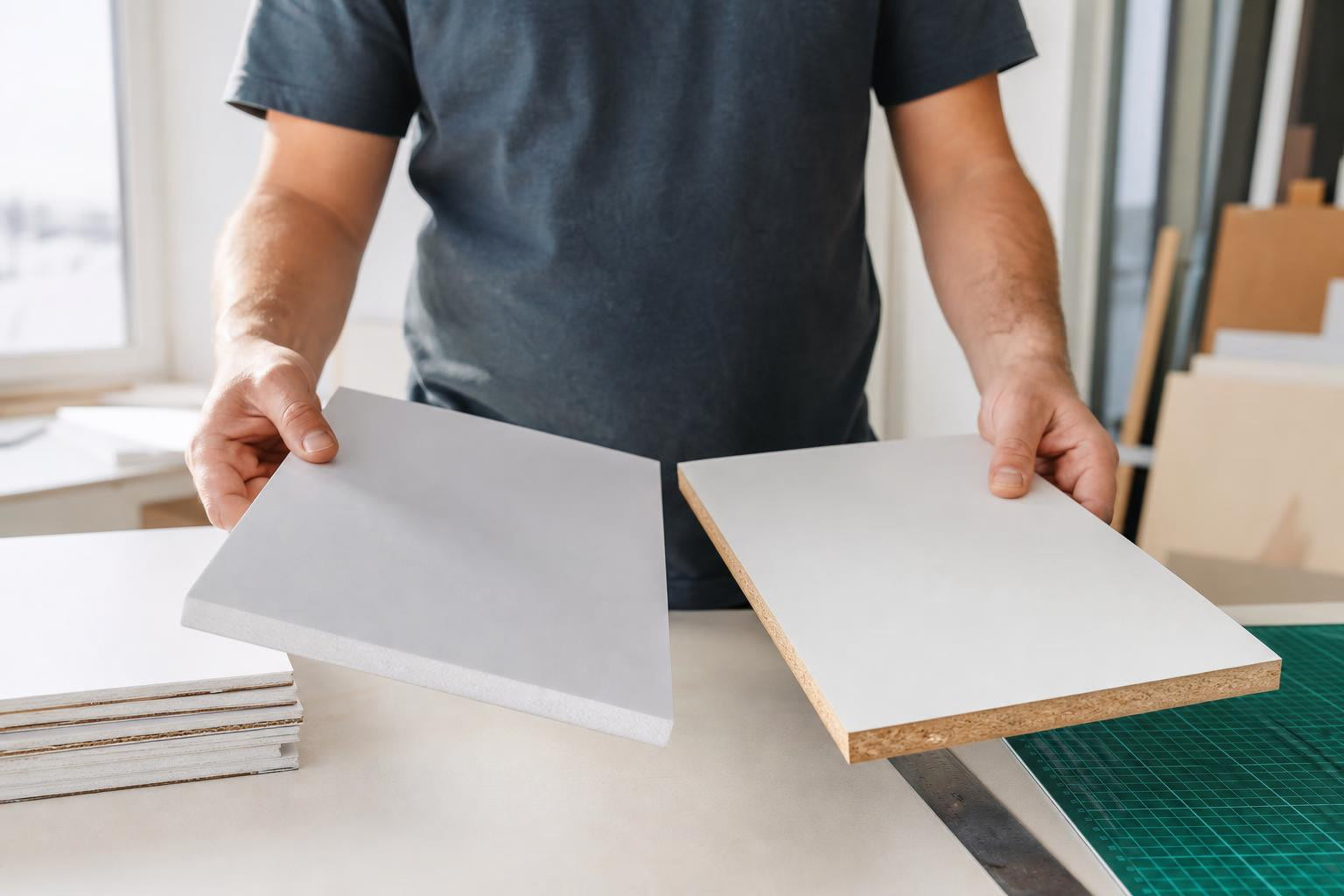
Foam board (also called foam core) is the workhorse of indoor signage. Its construction is simple: a layer of polystyrene foam sandwiched between two sheets of clay-coated paper. That paper surface accepts UV flatbed printing beautifully and gives you a clean, semi-gloss or matte finish right out of the box.
Standard thicknesses are 1/8", 3/16", and 1/2", with 3/16" being the most popular choice for printed signs. At that thickness, foam board weighs roughly 0.13 lbs per square foot, making it easy to hang, prop on an easel, or ship across the country without excessive packaging costs.
The tradeoff is durability. The paper faces dent easily, and foam board is not waterproof. It belongs indoors, period. But for event signage, trade show graphics, seasonal retail promotions, school projects, and courtroom exhibits, it does the job at a fraction of what heavier substrates cost.
Cutting foam board takes nothing more than a sharp utility knife and a straightedge. That accessibility is a big part of its appeal for DIY users and small businesses.
Order custom foam board prints in sizes up to 4 ft × 8 ft with next-business-day production.
What Is Gatorboard?
Gatorboard (sometimes written as Gator Board, gator foam, or by its brand name Gatorfoam) is a step up in rigidity and toughness. Manufactured by 3A Composites, Gatorfoam has been the display industry’s leading high-performance foam board for more than 30 years.
The construction difference is in the faces. Instead of paper, gatorboard uses Luxcell wood-fiber veneers impregnated with resin. Those veneers make the surface extremely resistant to dents and give the board better moisture resistance than standard foam core. The core itself is dense extruded polystyrene foam.
Gatorboard comes in thicknesses from 3/16" all the way up to 3" for specialty structural uses. The most common sign-making sizes are 3/16" and 1/2". At 3/16", it weighs about 0.22 lbs per square foot, roughly 70% heavier than foam board on a per-area basis but still very light in absolute terms. A full 48×96 sheet at 1/2" thick weighs about 10 lbs.
It’s available in white, black, and kraft finishes with a natural matte surface texture. One important note for anyone in the museum or archival world: gatorboard is not acid-free, so it’s unsuitable for conservation framing or permanent archive displays.
And a practical warning that manufacturers don’t advertise: the wood-fiber veneer edges are notoriously sharp. Practitioners on the Signs101 professional sign-making forum have mentioned this more than once, with one member noting, “I actually have scars from Gatorboard.” Handle with care, or sand the edges after cutting.
Foam Board vs Gatorboard: Side-by-Side Comparison
| Feature | Foam Board | Gatorboard |
|---|---|---|
| Core material | Polystyrene foam | Dense polystyrene foam |
| Facing | Clay-coated paper | Wood-fiber veneer (resin-impregnated) |
| Common thicknesses | 1/8", 3/16", 1/2" | 3/16", 1/2" (up to 3") |
| Weight at 3/16" | ~0.13 lbs/sq ft | ~0.22 lbs/sq ft |
| Dent resistance | Low | High |
| Warp resistance | Low to moderate | High (with caveats) |
| Moisture resistance | Low (paper absorbs water) | Moderate (resin coating helps) |
| Outdoor suitability | No | Short-term only |
| Ease of cutting | Easy (utility knife) | Harder (sharp blade or power saw) |
| Cost per sheet (48×96) | ~$10 wholesale | ~$40 wholesale |
| Indoor lifespan with care | Months to ~1 year | 2+ years |
| Acid-free options | Available in specialty versions | No |
| Default finish | Semi-gloss | Matte |
The cost difference is consistent across sources. One sign shop owner on the Signs101 forum put it plainly: white foam core at 48×96 runs about $10 a sheet versus $40 for the same size in Gatorfoam. That 4x price gap is the central tension in the foam board vs gatorboard decision.
Durability: Where the Gap Really Shows
This is where gatorboard earns its premium. The wood-fiber faces resist dents, scuffs, and corner damage that would ruin a foam board sign in a busy retail environment. Foam core’s paper surface is fragile enough that stacking products against it or bumping it with a cart will leave visible marks almost immediately.
One practitioner on an industry blog captured it well: the dents and creases from daily use drove them to upgrade their photo setup to gatorboard, specifically because it would survive near-daily handling for the foreseeable future. But they added an honest qualifier, noting they were only doing that because they could expense the cost. If buying out of pocket, they said they’d probably stick with foam board and just be careful.
Warping tells a similar story, with a twist. Foam board is prone to warping, especially when vinyl is applied to one side. Professional sign makers on forums consistently report that foam core warps noticeably over time with vinyl, while gatorboard doesn’t. But gatorboard is not immune. Multiple UV flatbed shop owners on Signs101 have reported that gatorboard warps in humid, non-climate-controlled storage. One wrote that “almost as soon as we open a case of Gator it starts warping” in certain temperature and humidity conditions. Store both materials flat in a climate-controlled space.
Moisture Resistance: Better Is Not Waterproof
Gatorboard handles moisture significantly better than foam board thanks to its resin-impregnated veneers. Where foam board’s paper faces will absorb water and delaminate quickly, gatorboard’s surface sheds light moisture without immediate damage.
That said, neither material is waterproof or rated for long-term outdoor use. Gatorboard can handle short-term outdoor placement (a weekend farmers market, for example) but will deteriorate under sustained exposure to rain and humidity. For environments like restaurant kitchens, bathrooms, or poolside areas, a waterproof PVC board is the better call. You can also read more about choosing waterproof board for restaurant menus if that’s your situation.
Cutting and Fabrication
Foam board wins here, no contest. A sharp utility knife, a metal straightedge, and a cutting mat are all you need. Even intricate shapes are manageable for a careful DIY user.
Gatorboard is a different animal. The wood-fiber veneer is tough enough that it chips unless cut with a very fine, sharp blade. Hand cutting is possible after scoring with a short craft blade, but most professionals use a router or table saw for clean edges. If you don’t own those tools, gatorboard becomes a “have it cut for you” material, which adds cost or limits your options.
Print Quality on Both Substrates
Both foam board and gatorboard accept UV flatbed direct printing and mounted vinyl graphics equally well. The difference comes down to surface finish. Foam board’s clay-coated paper provides a smooth, slightly glossy base that makes colors pop with minimal effort. Gatorboard’s wood-fiber surface gives a natural matte look, which some photographers and designers prefer for its lack of glare.
For foam board, adding lamination changes the game. Matte lamination reduces glare (ideal for courtroom exhibits and conference displays), while gloss lamination intensifies color saturation for retail and art prints. If you’re weighing your options, this guide to choosing lamination for printed signs covers the tradeoffs in detail.
When to Choose Foam Board
Foam board is the right pick for the majority of indoor signage needs. Specifically:
Short-term and single-use displays. Event signage, seasonal promotions, conference presentations, and grand opening graphics all fit squarely in foam board territory. You get a professional look at a budget that allows you to refresh graphics regularly.
Budget-sensitive projects. Schools, small businesses, nonprofits, and anyone running a pop-up event will appreciate spending $10 per sheet instead of $40. That savings multiplies fast when you’re producing a dozen signs.
DIY cutting and customization. If you need to trim signs on-site or cut custom shapes by hand, foam board cooperates. Gatorboard fights back.
When lamination closes the durability gap. This is the insight most comparison articles miss. Adding matte or gloss lamination to foam board protects the print surface from scratches, fingerprints, and light moisture. A laminated foam board sign can serve for months in a high-traffic environment. Dry-erase laminated boards take this further, creating reusable signs that can be wiped clean and rewritten, which makes them popular for restaurant specials, office checklists, and presentation checks.
When display hardware does the heavy lifting. Pairing foam board with proper mounting hardware transforms it from a flimsy-feeling sign into a professional display. Triangle feet create clean freestanding signs, while wall clips give a polished mounted look without frames.
When to Choose Gatorboard
Gatorboard justifies its price in specific situations:
Repeated setup and teardown. If you’re hauling the same booth graphics to trade shows month after month, foam board will show wear after two or three uses. Gatorboard survives the handling.
High-traffic, high-contact areas. Wayfinding signs in busy lobbies, point-of-sale displays that customers brush against, or directional signage in a warehouse, these are spots where dent resistance matters.
Semi-permanent displays lasting one to two or more years. A company lobby sign, a permanent classroom visual, or a gallery-mounted photograph that needs to stay flat and pristine for years benefits from gatorboard’s rigidity.
Photo mounting where flatness is critical. Photographers on the DPReview forums consistently mention gatorboard (alongside dibond, an aluminum composite panel) as their go-to for mounted prints. The rigidity prevents bowing that would distort an image over time.
When the budget allows a 3 to 4x premium. As one sign forum regular put it, gatorboard is more durable and less prone to warp, “but cheapskates will nearly always go for the cheaper option.” If the project budget supports it and longevity matters, the investment pays for itself.
The Archival Question
Neither foam board nor gatorboard is truly archival. A photographer in the DPReview community summed it up: “None of the composite mounting materials are considered truly archival nor are the adhesives that are commonly used.” Standard foam board is available in acid-free specialty versions for museum and conservation framing. Gatorboard is not acid-free in any version, so it should not be used for works destined for permanent archive or museum display. For those applications, consult a conservation framer about proper rag board or aluminum-faced panels.
Pro Tips for Getting the Most from Either Material
Store flat and climate-controlled. Both materials warp when stored on edge or in humid environments. Even gatorboard, despite its reputation, will bow in a non-climate-controlled warehouse.
Lamination is foam board’s secret weapon. For a few dollars more per sign, lamination adds scratch resistance, UV protection, and a small degree of moisture resistance. It won’t turn foam board into gatorboard, but it meaningfully extends the useful life of a printed sign.
Match thickness to size. For foam board prints larger than about 24×36, stepping up to 1/2" thickness provides rigidity that 3/16" can’t match at larger dimensions. This single change eliminates most of the flex and sag that gives foam board a cheap reputation.
Consider the middle ground. Practitioners on Signs101 mention expanded PVC-faced foam boards (sometimes called ultraboard) as a middle option priced between foam board and gatorboard. These offer warp resistance without gatorboard’s sharp edges or full price premium.
Think about what goes around the sign, not just the sign itself. A foam board print in a proper frame, on a metal easel, or mounted with standoffs looks every bit as professional as gatorboard in most settings. The display system matters as much as the substrate.
If you’re still unsure which material fits your project, talk to a real person who can walk you through the options based on your specific use case, timeline, and budget.
Frequently Asked Questions
Is gatorboard waterproof?
No. Gatorboard resists moisture better than foam board because of its resin-impregnated wood-fiber faces, but it is not waterproof. It can handle short-term outdoor placement or light splashes, but sustained exposure to rain or high humidity will damage it over time. For truly wet environments, a waterproof PVC-based board is the right choice.
Can I cut gatorboard with a utility knife?
You can, but it’s not easy. The wood-fiber veneer is hard enough to chip if you don’t use an extremely sharp, fine blade. Most people score it first with a short craft blade and then snap it, or use a router or table saw for cleaner results. Foam board, by contrast, cuts easily with a standard utility knife.
How much does gatorboard cost compared to foam board?
Gatorboard typically runs 3 to 4 times the price of foam board. At the wholesale/trade level, a 48×96 sheet of foam board costs around $10 while the same size in gatorboard runs about $40. For custom-printed signs, the price gap narrows somewhat because printing, lamination, and finishing costs are similar for both substrates.
How long does foam board last indoors?
With careful handling and indoor placement away from direct sunlight, a foam board sign lasts several months to about a year. Adding lamination extends this. Gatorboard can last two or more years under similar conditions, which is why it’s preferred for semi-permanent installations.
Is gatorboard good for archival photo mounting?
No. Gatorboard is not acid-free, which disqualifies it for conservation framing or museum-grade archival use. It’s fine for commercial photo displays, office decor, and trade show graphics where the print doesn’t need to be preserved indefinitely. For true archival mounting, consult a conservation framer about acid-free alternatives.
Can I use foam board outdoors?
Foam board should not be used outdoors. The paper faces absorb moisture and the board will warp, delaminate, or disintegrate in rain or high humidity. Even gatorboard is only suitable for short-term outdoor use (a weekend event, for example), not permanent exterior signage.
Does lamination make foam board as durable as gatorboard?
Not quite, but it closes the gap meaningfully. Lamination protects the printed surface from scratches, fingerprints, and light moisture. It doesn’t change the structural rigidity of the foam core, so gatorboard still wins on dent resistance and long-term flatness. But for many signage applications, a laminated foam board print provides plenty of durability at a fraction of the cost.
What’s a good alternative if I need something between foam board and gatorboard?
Expanded PVC-faced foam boards (often called ultraboard) sit between the two in both price and performance. They resist warping better than foam board without the sharp edges and full cost of gatorboard. For moisture-heavy environments specifically, a 3 mm waterproof PVC board is another strong option.


